Processing & Storage
Rugged computers, servers and mobile devices for tactical systems, deployed infrastructure and demanding field operations.
Rugged computers, servers and mobile devices for tactical systems, deployed infrastructure and demanding field operations.
Operator displays and panel PCs for tactical visualization, platform integration and demanding defense environments.
Rugged network hardware for secure data routing, tactical communications and resilient field network infrastructure.
Power solutions for stable system operation, power distribution and deployed defense platforms.
ARTICLE
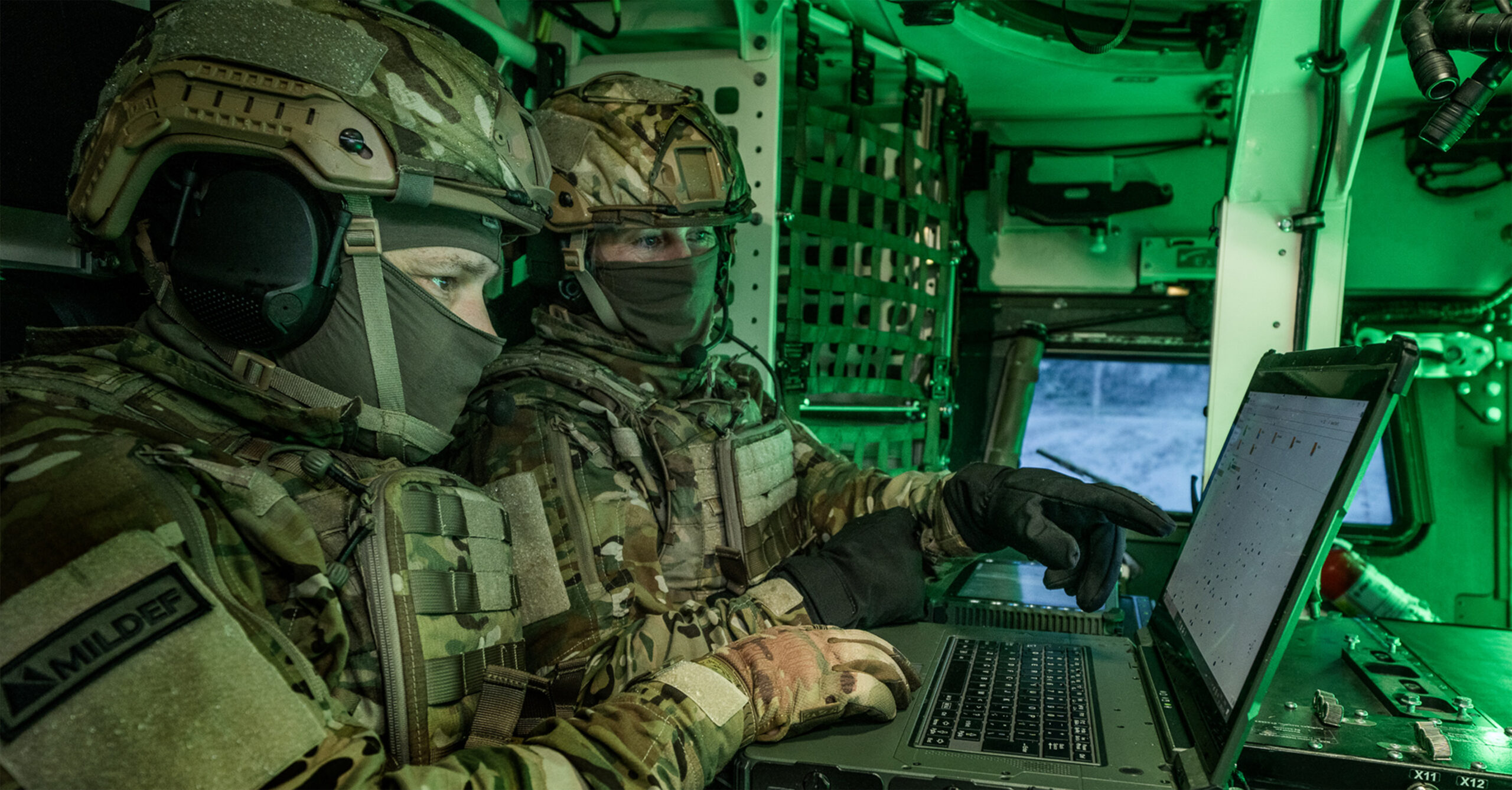
Modern defense platforms depend on a growing number of technologies. Rugged computers, displays, networks, and software may come from different suppliers, be introduced at different stages, and need to operate together within the same environment.
The challenge is turning new technology into operational capability without adding unnecessary complexity. That requires seeing the full picture and looking beyond individual components.
Technology only creates operational value if it helps users observe, orient, decide, and act more effectively.
The wider operational requirements need to be considered from the earliest concept and development phases. A component may meet specific demands on its own, but its operational value also depends on how well it fits into and complements the environment around it. The performance of the whole system can ultimately be limited by its weakest element.
What begins as a product level decision can therefore have consequences across the wider platform.
The objective isn’t to add more technology. It’s to improve the operational capability of the entire platform.
Military platforms can remain in service for decades, while the technology inside them evolves much faster. Introducing new capability therefore rarely means replacing everything that came before it, leaving legacy platforms and new technology to operate side by side. This means defense organizations need to manage multiple systems and generations of technology simultaneously.
That complexity has consequences. It can extend timelines, increase risk, and add cost throughout the lifecycle.
Technology decisions need to consider today’s requirements, as well as what may need to change tomorrow. Modularity and interoperability can make it easier to introduce new technology without redesigning the wider environment each time.
The question we should be asking ourselves: how do we make sure today’s technology decisions don’t limit what we need to do tomorrow?
Adding more technology doesn’t automatically create greater operational capability. The individual components still matter, but how they work together and how effectively the wider environment can adapt over time are equally important.
For MilDef, this means looking beyond individual products and keeping the wider operational requirements in focus.
The objective isn’t to add more technology. It’s to improve the operational capability of the entire platform.
At AUSA 2026, we look forward to continuing that conversation with customers, partners, and industry colleagues. You can find us at Booth 7707, October 12-14 in Washington, D.C.
Explore our AUSA 2026 event page for more information and to book a meeting with our team.